
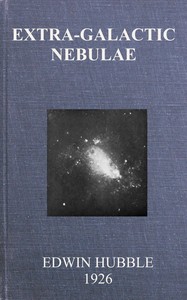
Extra-galactic nebulae by Edwin Hubble
So, you think you know space? Extra-galactic Nebulae by Edwin Hubble is the book that made us all realize our little corner of the cosmos isn’t the only show. Originally published in 1936, this is the real deal—Hubble’s own hand laying out the biggest discovery since Copernicus: galaxies beyond our own. No fluff, just raw science gem.
The Story
Here’s the conflict: back in the early 1900s, people looked at fuzzy lights through telescopes and called them ‘nebulae’—just cloudy stuff in our backyard. Hubble didn’t buy it. Using the mighty 100-inch telescope at Mount Wilson, he found Cepheid variable stars in something called Andromeda. Those stars told him the distance: it was waaaay beyond the Milky Way. This book is his debate—short, fierce, and brilliant—showing how he mapped the universe from a few pinpricks of light.
Why You Should Read It
First, total nerd joy—you’re in the head of a man who rebuilt our reality. Hubble’s writing feels like a smart lecturer at a campfire, dropping bombs of evidence (spectral lines, redshifts, explosions of stars) without making you sweat. Reading it changed how I look at dark skies. Every photo is a blow—look, he says, these are suns like ours. The other vibe is pure wonder: the Milky Way isn't special, just one among thousands. That hits you like a truck. It’s lonely? Yes. But also freedom—space becomes infinite playground.
Final Verdict
Perfect for history buffs, future astronauts, or anyone who loves seeing the edges of what humans know. It’s short enough to read on a plane (how fitting). You’ll walk away feeling like a secret is yours. Rating: five polished Mount Wilson mirrors.
Legal analysis indicates this work is in the public domain. Distribute this work to help spread literacy.
Thomas Martinez
2 years agoExtremely helpful for my current research project.



Margaret Smith
9 months agoFinally found a version that is easy on the eyes.