
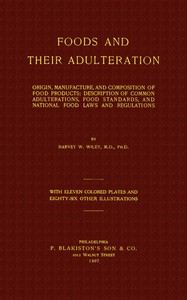
Foods and Their Adulteration by Harvey Washington Wiley
Let's be clear: this isn't a novel. But the story it tells is real, and it's a thriller. Published in 1907, this book was a weapon in a war for the American dinner plate. Harvey Washington Wiley, a chemist and the chief of the Bureau of Chemistry (the FDA's grandparent), had spent decades investigating the food industry. He wasn't just writing a dry report; he was building a public case.
The Story
The 'plot' is Wiley methodically exposing the lies in everyday food. He goes aisle by aisle. He shows how bakers used alum to make bad flour look white, how brewers added bitter chemicals to fake the taste of hops, and how 'maple syrup' was often just corn syrup and brown coloring. He doesn't just name the problems; he explains the chemistry in a way a regular person could understand. The central conflict is Wiley versus an entire industry that saw his science as bad for business. The climax of this real-life drama was the passage of the 1906 Pure Food and Drug Act, which this book helped make possible.
Why You Should Read It
You should read it because it connects the dots between history and your own kitchen. It’s easy to take safe food for granted. This book shows you the chaotic, dangerous marketplace that existed before regulations. Wiley isn't a distant historical figure here; his passion and frustration jump off the page. You feel his determination to protect people from being poisoned for a penny's profit. It reframes food safety not as boring bureaucracy, but as a hard-won right. It also makes you think critically about modern food debates—what are we arguing about today that will seem obvious in 100 years?
Final Verdict
This book is perfect for anyone who loves history, true crime, or food science. If you enjoy podcasts like 'Stuff You Missed in History Class' or documentaries about societal change, you'll be hooked. It's also a must-read for foodies and health-conscious readers who want to understand how we got here. Be warned, the writing style is of its time—it's formal, but clear. Think of it less as a casual read and more as an incredible primary source document. You're getting the story straight from the man who changed what America eats. It’s a powerful reminder that progress often starts with one person asking, 'What's really in this?'
Legal analysis indicates this work is in the public domain. It is now common property for all to enjoy.
Aiden Moore
1 year agoJust what I was looking for.
Matthew White
2 years agoSimply put, the arguments are well-supported by credible references. I couldn't put it down.
Thomas Hernandez
4 months agoCompatible with my e-reader, thanks.




Daniel Gonzalez
2 years agoFrom the very first page, the pacing is just right, keeping you engaged. I would gladly recommend this title.