
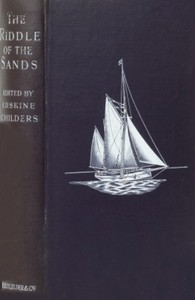
The Riddle of the Sands by Erskine Childers
Picture this: London, 1902. Carruthers, a bored civil servant, gets a cryptic invitation from an old friend, Davies, to join him on a small boat in the North Sea. Expecting a relaxing cruise, Carruthers is instead plunged into a world of sandbanks, shifting tides, and freezing fog aboard the tiny yacht Dulcibella. Davies isn't just sailing for fun. He's obsessed with the strange behavior of a German yacht, the Medusa, and its mysterious owner, Dollmann. Davies believes the Germans are secretly charting the shallow, complex Frisian coast—not for pleasure, but for a future invasion of England.
The Story
The plot is a slow, masterful burn. It's less about car chases and more about nautical charts, tidal calculations, and the gut-churning fear of running aground. Carruthers, the skeptic, is slowly converted by Davies's quiet certainty and the mounting pile of odd coincidences. Their investigation becomes a dangerous game of cat and mouse on the water, where a wrong turn in the mist could mean capture—or a watery grave. The 'riddle' is whether their theory is paranoid fantasy or a terrifying truth, and the 'sands' are both the physical landscape and the shifting ground of their own assumptions.
Why You Should Read It
What grabbed me wasn't just the spy stuff; it was the friendship. Carruthers and Davies are a fantastic duo—one all brains and city polish, the other all saltwater instinct and stubborn grit. Their dynamic feels real. You feel the cold, taste the salt, and share their exhaustion. Childers, who was a sailor himself, makes you understand the sea as both a character and a weapon. The book is a chilling reminder that the biggest dangers often hide in plain sight, disguised as something mundane. It’s about the courage of paying attention when everyone else is looking away.
Final Verdict
This book is perfect for anyone who loves a smart, atmospheric mystery. If you enjoy classic adventure, historical fiction, or tales where the setting is as important as the characters, you'll be hooked. It's a must-read for fans of John le Carré or early 20th-century history, but honestly, its tension is timeless. Just be warned: you might finish it and start looking at maps of the coast a little differently.
This title is part of the public domain archive. You can copy, modify, and distribute it freely.
Deborah Wright
1 year agoJust what I was looking for.
Ethan Gonzalez
9 months agoSolid story.
John Lewis
2 years agoCitation worthy content.





Linda Lee
2 years agoIf you enjoy this genre, the depth of research presented here is truly commendable. Don't hesitate to start reading.