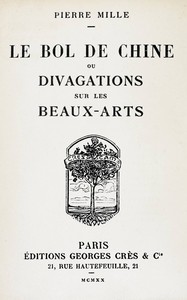
Le bol de Chine; ou, divagations sur les beaux-arts by Pierre Mille
First published in 1911, Le bol de Chine; ou, divagations sur les beaux-arts is a collection of essays by French journalist and writer Pierre Mille. The title translates to 'The Chinese Bowl; or, Ramblings on the Fine Arts,' which perfectly sets the tone. This isn't a dry art history textbook. It's a series of personal, meandering reflections sparked by objects—most notably, a simple Chinese ceramic bowl.
The Story
There's no traditional plot. Instead, imagine the author holding this bowl, turning it in his hands, and letting his thoughts drift. He uses it as a gateway to talk about Chinese painting, sculpture, and aesthetics. He compares Eastern and Western artistic traditions, ponders why certain forms are pleasing, and questions the European assumptions of his time about what constitutes 'good' art. The 'story' is the journey of his curiosity, moving from the specific texture of the bowl to big, timeless questions about creativity and perception.
Why You Should Read It
What I loved most was Mille's voice. He writes with a sense of wonder, not authority. He's not lecturing you; he's thinking out loud, inviting you to look closer at the world. Reading it feels like a direct line to a thoughtful mind from over a century ago, yet the questions he asks about art and cultural understanding still feel fresh. It's a calming, intellectual escape that makes you appreciate the beauty in everyday objects.
Final Verdict
This book is perfect for a specific kind of reader. If you love slow, essay-style non-fiction, enjoy art but find heavy theory intimidating, or just want a book of smart, conversational reflections to dip into before bed, you'll find a friend in Pierre Mille. It's not for someone seeking a fast-paced narrative, but for a reader who enjoys a thoughtful stroll through ideas, guided by a charming and observant companion.
The copyright for this book has expired, making it public property. Knowledge should be free and accessible.