
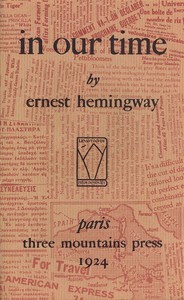
In our time by Ernest Hemingway
Let's be clear: don't go into this book looking for a traditional, beginning-to-end novel. 'In Our Time' is a collection of short stories and vignettes, often just a page or two long, that Hemingway arranges like a mosaic. The main thread follows Nick Adams from his boyhood in the forests of northern Michigan through his experiences as a soldier in World War I and his troubled return home. But woven between these Nick stories are stark, brutal sketches—'interchapters'—of war, crime, and bullfighting. One moment you're fishing with Nick, the next you're in a trench or watching a matador get gored.
The Story
There isn't a single plot. Instead, the book builds a feeling. We see Nick learn about birth and death in the wild, get wounded in the war, and try to piece his life back together afterward. The interchapters show us a wider world of violence and stoicism. It's like Hemingway is showing us the public trauma of the era (the war, social upheaval) alongside one man's private struggle to cope with it. The connection is in the emotion, not a direct storyline.
Why You Should Read It
This is where Hemingway found his famous voice. The writing is so clean and direct it feels physical. He cuts out every unnecessary word, which forces you to lean in and pay attention. The power is in what he doesn't say. When a character is scared or heartbroken, Hemingway shows you their actions—a hand trembling, a change of subject—and lets you feel the weight. It makes the emotions truer and heavier. Reading it, you understand why this style was a revolution. It wasn't just new writing; it was a new way of seeing a world that had just been shattered by war.
Final Verdict
Perfect for anyone who appreciates powerful, economical writing and doesn't mind a book that makes you work a little to connect the dots. It's a cornerstone for literature lovers who want to see where modern American fiction really began. If you like stories that are all atmosphere and unspoken truth over fast-paced plotting, this is your classic. Fair warning: it's not a cheerful read, but it's a profoundly honest one that sticks with you.
This masterpiece is free from copyright limitations. It is available for public use and education.
Noah Robinson
1 year agoThe fonts used are very comfortable for long reading sessions.
Margaret Wilson
2 years agoGreat reference material for my coursework.
Elizabeth Young
1 year agoVery interesting perspective.