About 17 minutes
Nonsense Drolleries The Owl & The Pussy-Cat—The Duck & The Kangaroo. — Story, Setting & Ideas
Science Fiction Utopias
3,851 recorded words. 2 minutes difference from this book's estimate.
View Gutenberg source #20113
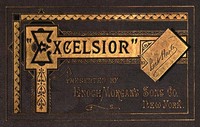
"Excelsior" — A Reader’s Guide can be approached with a clearer sense of reading commitment from its source measurements: 3,372 words, 15 min estimated reading time, and 1 detected text section.
The text analysis averages about 23.8 words per sentence, while the detected sections provide another way to judge how the source is divided.
Project Gutenberg metadata also associates the work with “Humorous poetry,” connecting these edition facts with the source record’s subject description.
Explore this collection
These alternatives are selected using recorded categories and estimated reading time.
About 17 minutes
Science Fiction Utopias
3,851 recorded words. 2 minutes difference from this book's estimate.
View Gutenberg source #20113About 24 minutes
Science Fiction Utopias
5,353 recorded words. 9 minutes difference from this book's estimate.
View Gutenberg source #42667About 32 minutes
Science Fiction Utopias
7,276 recorded words. 17 minutes difference from this book's estimate.
View Gutenberg source #36841Search stored excerpts and compare books → Choose by your preferences →
Choices use stored catalog measurements. Estimates vary with reading speed. A shared category is a catalog label, not a claim that two books have the same argument or literary quality.
Search reads excerpt text stored with this catalog and links to its associated Gutenberg record. The connection is stored in the site database; this tool does not recheck that every excerpt is word-for-word identical to that external record. Excerpt search does not cover every chapter and does not verify historical publication dates.
Catalog snapshot checked: 2026-09-25. Coverage: 98 public books, 98 available source excerpts.
Read the complete public-domain text at its original source.
Read on Project GutenbergBret Harte's Excelsior (1867) is a sustained parody of Henry Wadsworth Longfellow's 1841 poem of the same name. Where Longfellow's youth climbs a mountain bearing a banner with the motto 'Excelsior,' Harte's protagonist carries a stencil-plate that reads 'SAPOLIO.' The solemn quatrains of the original are preserved, but each stanza is followed by a block of advertising copy—'CLEAN PAINT, OIL CLOTHS, FLOORS, WOOD WORK, TABLES & SHELVES with Sapolio'—that undercuts the lofty tone. The poem's humor derives from the clash between high diction and commercial vulgarity, as the hero defaces fences, rocks, and even a maiden's plea with his relentless product.
Harte retains the exact meter and rhyme scheme of Longfellow's original, but the insertion of advertising slogans after each stanza creates a jarring juxtaposition. The first stanza sets the scene: 'The shades of night were falling fast, / As through an Eastern village passed / A youth who bore, through dust and heat, / A stencil-plate, that read complete—' and then the line break gives way to 'SAPOLIO.' This pattern repeats throughout, with the product name appearing as a refrain. The effect is to transform a narrative poem into a catalog of cleaning instructions. The final stanza shows the youth 'old and fat, / Shameless, but vigorous,' sitting on a mountain summit while tourists read his legend on every rock. The parody is structural: the heroic quest becomes a marketing campaign.
The poem's comedy hinges on the mismatch between elevated poetic language and the mundane, often crude, speech of the protagonist. Longfellow's youth is 'sad' and 'pale'; Harte's youth has teeth 'White with “Odonto”' and hisses, 'Well, blow Me tight if here is ’ary show!' The maiden's plea—'What with “Bixby’s Best,” / And “Simmons’ Pills,” we’re like to die'—is answered not with romance but with a sales pitch: 'Will you try—SAPOLIO?' The old man's warning that his fence is already covered with 'Mustang Liniment' is ignored. Harte also parodies the original's dramatic warnings: 'Beware them peaks! That wall so bright / Is but a snow bank, gleaming white, / Your paint wont stick!' The reply is a boast: 'I’ve done it! “How is that for high?”' The hero's persistence is both absurd and relentless.
The poem presents advertising as an unstoppable force that colonizes every surface and interaction. The youth's stencil-plate and paintbrush are tools of invasion: he defaces 'household fences,' a wall already covered with 'Gargling Oil' and 'Bixby’s Blacking,' and even the natural landscape—'On ev’ry rock, to their dismay, / They read that legend strange, alway.' The Sabbath morning setting, with 'White Mountain tourists slowly spurred,' adds a note of sacrilege. The final image of the hero 'old and fat' but still checking luggage with his product suggests that advertising is eternal and shameless. Harte's parody anticipates modern concerns about commercial saturation, but does so with a light touch, never moralizing. The poem's brevity and tight structure make it a precise, effective satire.
Readers familiar with Longfellow's original will appreciate the fidelity of Harte's parody; those unfamiliar can still enjoy the poem as a standalone comic piece. The contrast between the solemn quatrains and the brash advertising copy rewards attention to detail. Harte's Excelsior is best read aloud, where the rhythm of the original and the jarring intrusion of product names become most apparent.
I remember evenings when Excelsior’s parody made me laugh, yet a restless longing lingered, much like the weary lads who roam through Poems and Songs of Robert Burns — Background and Themes. Both hold a fondness for earthiness, the way honest grime and stubborn hope rub shoulders. It feels like old friends, whispering across very different hills.
Use these questions to collect your thoughts before moving on.